

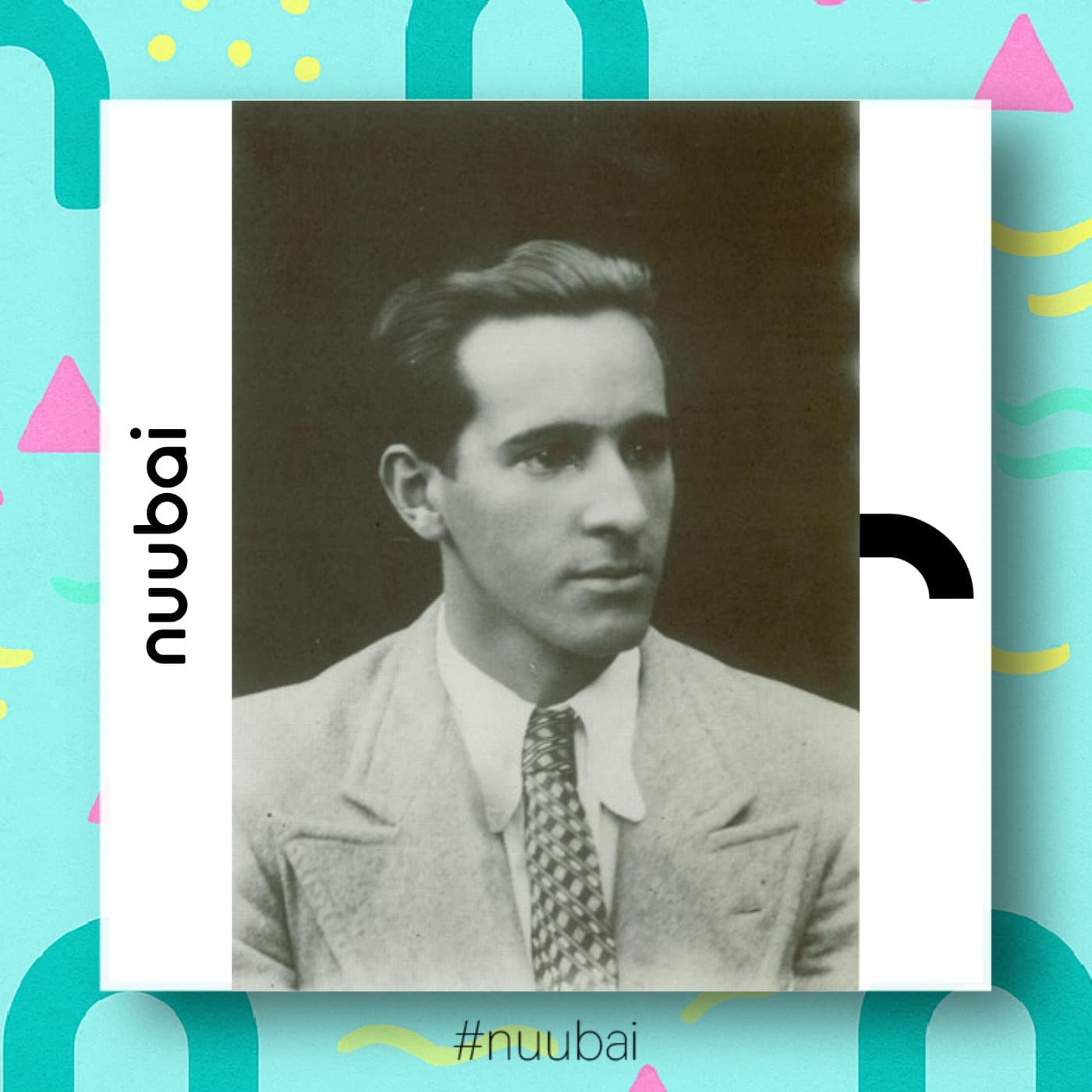
[ Cape Verdean morna is celebrated today, the 3rd of December, just days before the birthday of poet António Nunes (9 December) and the anniversary of its UNESCO proclamation as Intangible Cultural Heritage of Humanity (11 December). Nunes gave the morna its most beautiful poetry, offering the world a music that flew from the islands to the planet. nuubai honours this legacy with a text by Paulo Lobo Linhares on the poet and our morna. ]
António Nunes would have turned 101 on the 9th of December (2018). I returned to his book "Poemas de Longe" — this time to its first edition, lent to me by Dr. Helena Lobo.
I have always felt that António Nunes describes, with remarkable precision — almost cinematically — the places and moments he captures in his poems.
Returning to the book, I came across something that struck me as curious. Whether the author intended it or not, I cannot say — but the fact is that pages 10 and 11 carry two poems that, musically, complete each other: "Morna" and "Baile."
So taken was I by the poet's ability to describe the musicians, the instruments, the bodies moving together in dance, and even the smell of the room where the morna is played — that I could not resist sharing both poems here. In sequence. A reminder of how music and dance can be so precisely described, heard, and felt through words. To be read while imagining violins and guitars, and the slow intertwining of bodies on a dance floor.
Morna (free translation)
The same couples… the same streets…
The same square…
Only the faces of the men are not the same
and, drunk, arms hang heavy, men sway and fall…
Sound of violin slipping out from a ground-floor house
Smell of kerosene and smoke
Quêréna trembles her fingers over the strings,
Glazed eyes cry out for more grog!
Titina feels herself weightless in Armando's arms.
The Morna brings to the body its languor and its dream,
Like the moon casting shadows over impossible things
Dance (free translation)
Nézinho takes his stance,
the bow slides across the strings
and the man with the guitar
marks the beat.
Couples intertwine.
And the Morna falls
warm and slow
like the night outside…
Text originally published in the print edition of Expresso das Ilhas, no. 891, 24 December 2018.