

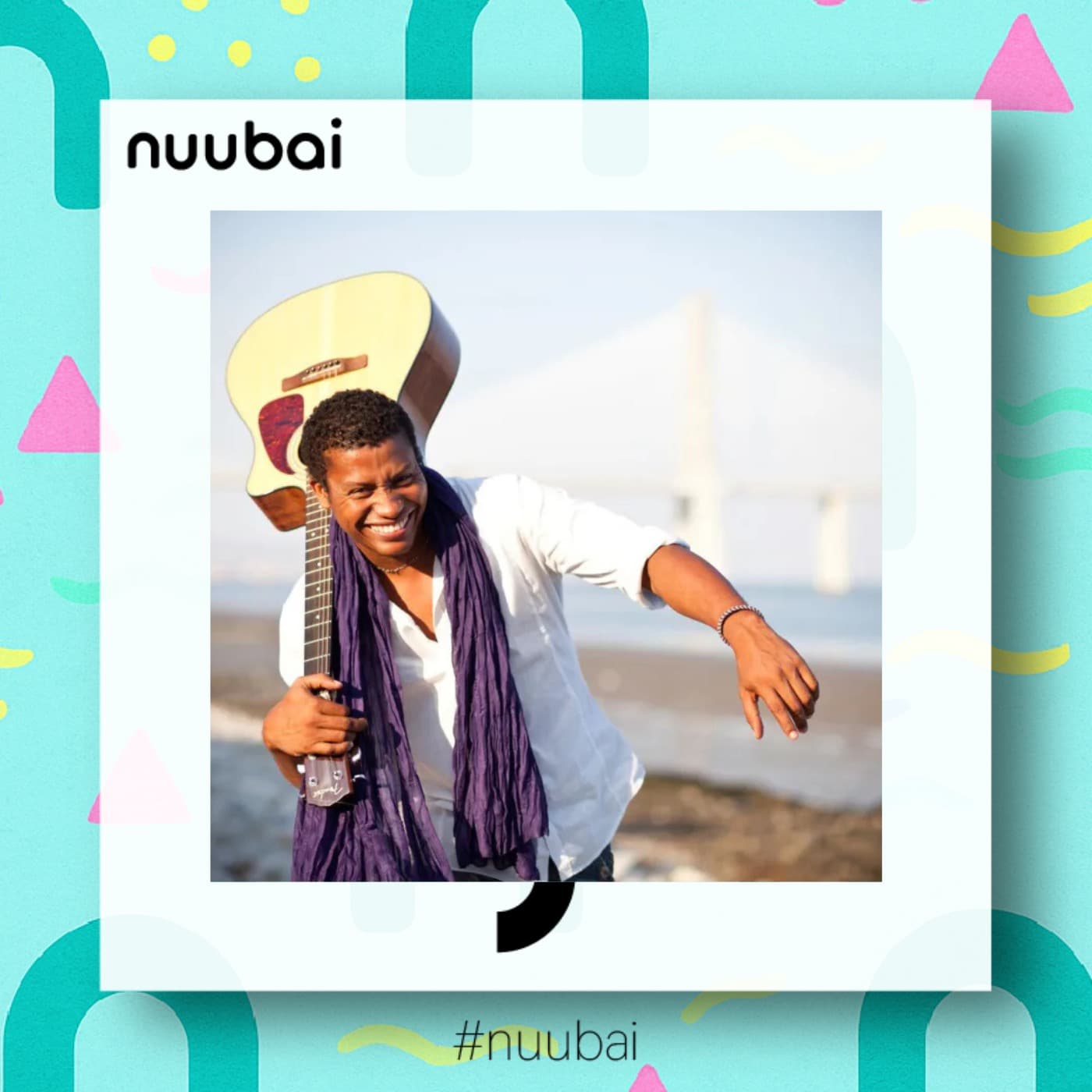
It was the 1990s. I had just arrived back for the holidays. Eager for anything new from home, I was running between bars looking for musicians. At the time there were two main stages: Quintal da Música and the unforgettable Pub TEX. That was the circuit — and the nights of music in Praia began. I kept moving, kept searching. And I kept finding. I remember the Thursday nights for the younger crowd at the 5tal, where voices were shyly beginning to emerge. They came tentatively, but already with enormous desire. By the end of the night, Pub TEX had become a daily ritual. More than a pub, it was a gathering place — somewhere to talk, and above all to listen to Cape Verdean music, especially from Santiago, which in that decade was in a state of pure ferment. A boiling of sound. An eboliSon.
And so the nights came — the nights of the TEX. They brought more music, a great deal of stage, countless jam sessions (and what real ones they were), and most importantly: the talking about music, the debating of it, and the easy pleasure of ending the night just listening to more records.
Meanwhile, live on stage, groups like Ayan were appearing — absolutely historic in the innovation they brought to a particular era of our music. They would later become the backing band for the great Pantera. One night, I walked in and, as I came down the entrance steps, the sound began to take hold of me completely. I went in. I sat at the small table in the left corner of the pub, the one facing the sound booth packed with CDs and vinyl. It was the smallest table, and for that reason the quietest. On stage I heard two musicians. Two guitars. They seemed to have found each other to become whole — in music and in soul.
One played with the kind of accompanying humility that all accompanists should bring, and which is so rare to find today. The other played with enormous will and an energy entirely his own — an originality that could not be faked. He was offering me something I had never heard in our music before. He was shy, but the music pierced right through that shyness and entered us all the more radiantly for it. The way he attacked the guitar was unlike anything else. His partner's support was natural — he understood that his role was to build a cushion so that everything could become a whole. The guitarist was called Júlio. Júlio Rodrigues. The singer — whom I had just encountered and who would go on to become one of the most precious and original musicians and composers in our music — was called Tcheka Andrade. From that day on, Cape Verdean music had a new reference point for me, and new terms by which to measure its evolution and innovation.
Tcheka's creativity as a lyricist was immense. He wrote the reality he lived — from the men of the fields and the streets of Piku to the young man going to the cinema for the first time. From the countryside to the city, every theme was sung with deep knowledge and without any desire to seem or to be seen. Only to believe. He gave his creativity free rein and used words in his music that came directly from his creative self — words that stunned us because they were sung as images. Tcheka's lyrics were an innovation in musical and visual language, in our own tongue. Later he would sing the Sea in a sublime way — his own sea, built from fragments of image and lived experience from the coastal land where he was born. His music — above all his guitar — was a pure blend of two instruments at once: strings and percussion. On those strings he beat his music, and from those same strings the melodies broke free, like the green hills of our interior after rain. Tcheka reinvented the way the guitar is played in the Santiago tradition.
From that night on, I never missed a Tcheka performance. Often the venue was a low stool or the steps outside the post office — for me, stages of the highest order. One day I was introduced to him, and my admiration for the musician only grew. He was humble and believed his music was nothing out of the ordinary. It was not, my dear Tcheka — it never was. I remember the day he told me, having learned I worked at Virgin Music, that he would like to record an album, but with music that felt more serious — perhaps with a little more jazz. I smiled. Tcheka had no idea how much jazz already lived inside him — understanding that jazz, at its core, means freedom and improvisation. Beyond already being it, any jazz added from the outside would only dilute the intensity of the musician. Tcheka was, and is, jazz in crystallised form. A friendship was born that day. Along with it, a deep admiration for an artist who is, in my view, and always will be, one of the greatest composers, musicians, voices and creators our music has ever produced.
Names such as Hernani nationally, the great group Arkora and its members who accompanied him, and internationally figures like Lenine and Mário Laginha, among many others, confirmed what was already clear — the rare and pure essence of Tcheka. When I returned from those holidays, and as his records came out one by one, they became a permanent fixture in the shops where I worked — Virgin and Fnac — for decades. I remember a well-known figure from Portuguese music criticism to whom I once played a Tcheka record. The next day he came back asking for the complete discography.
There is much still left to say about Tcheka's intensity. There will be more chronicles. There will certainly be returns to Tcheka in these pages — to the generation of the 90s, to the children of Pantera, to the stages of the TEX. Just as there will be more stages ahead for Tcheka, in Cabo Verde and across the world. Because Tcheka is the world, and of the world's music. An always that became the world — even in his own inconsistent way, always an always.